
Introduction
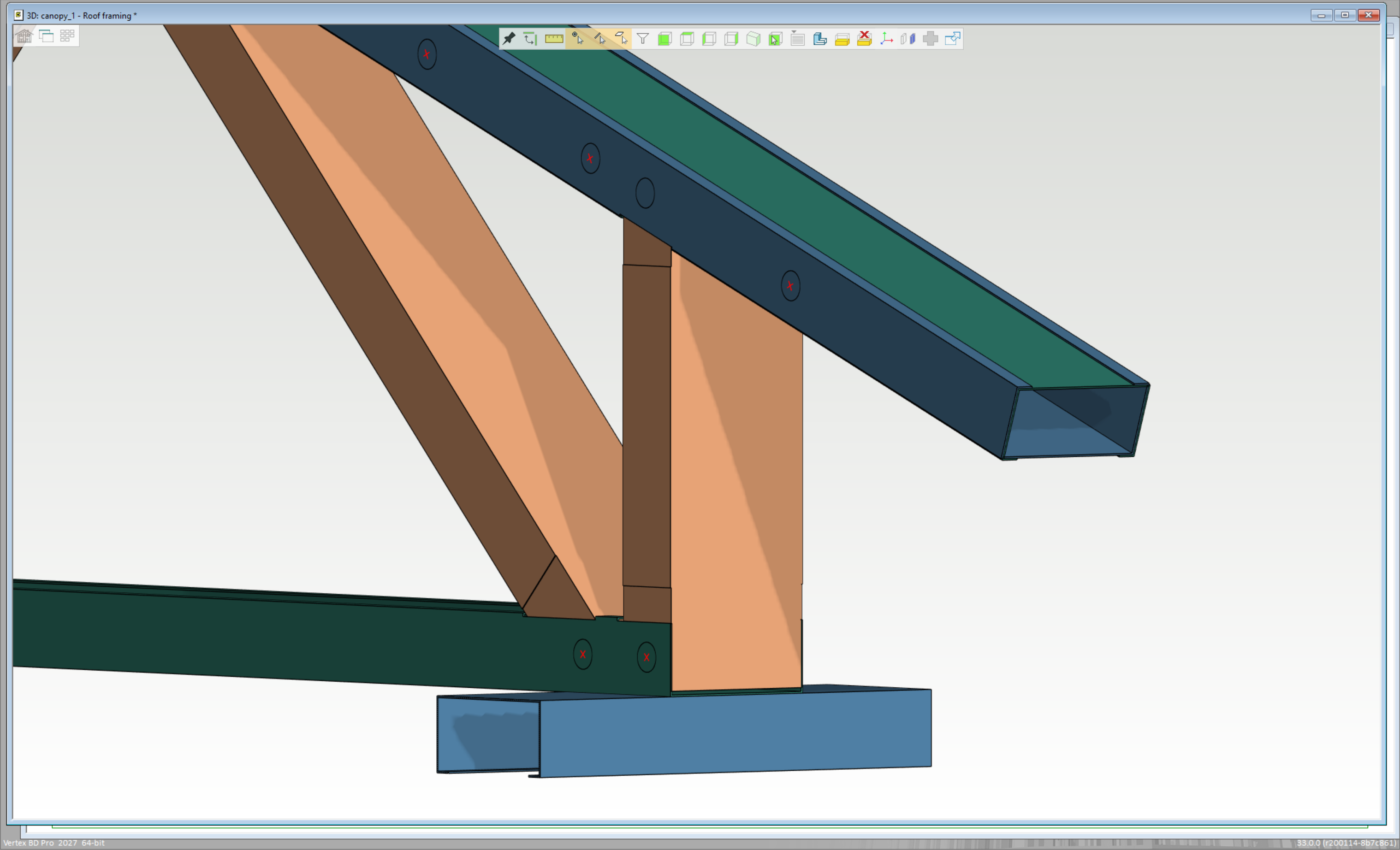
Boxing reinforcement is a useful tool to improve truss design. A second C section is placed to the main section face-to-face, connected by dimples on the flanges at set spacing. Asymmetric flange width is usually required to achieve proper fitment for boxing. Please refer to the properties of your roll form machine.
In previous versions, boxing reinforcement was treated as a flag. When boxing was flagged, the system would double the capacity of the main piece during capacity check. The stiffness, or deflection, of the main piece was not affected by boxing.
In the new version, an improved finite element model was implemented so that the boxing piece can now join truss engineering analysis. The results is that when trusses are reinforced by boxing, deflection is also reduced. The loads on the main piece are distributed to the boxing piece via the connecting dimples.
Engineering result comparison
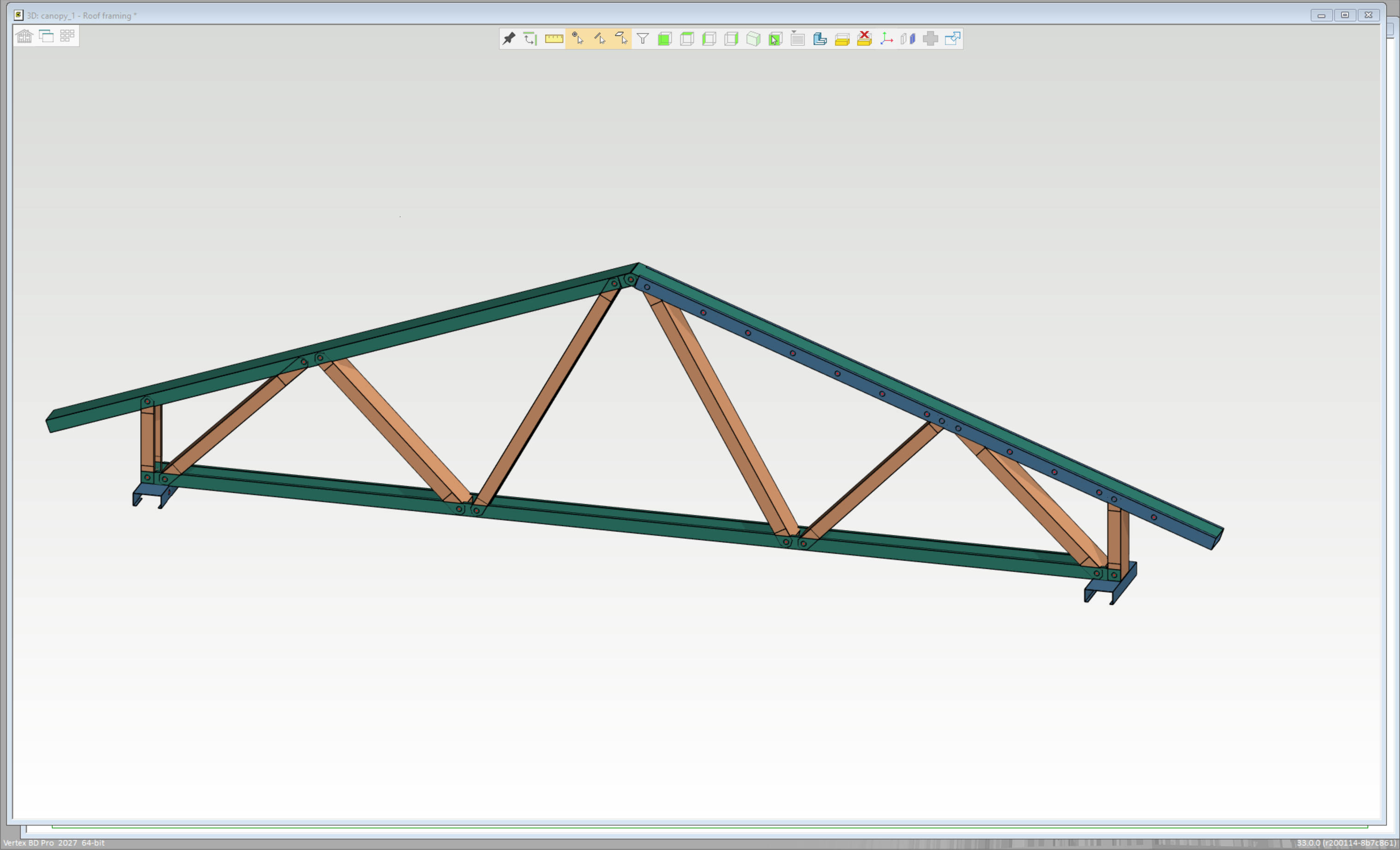
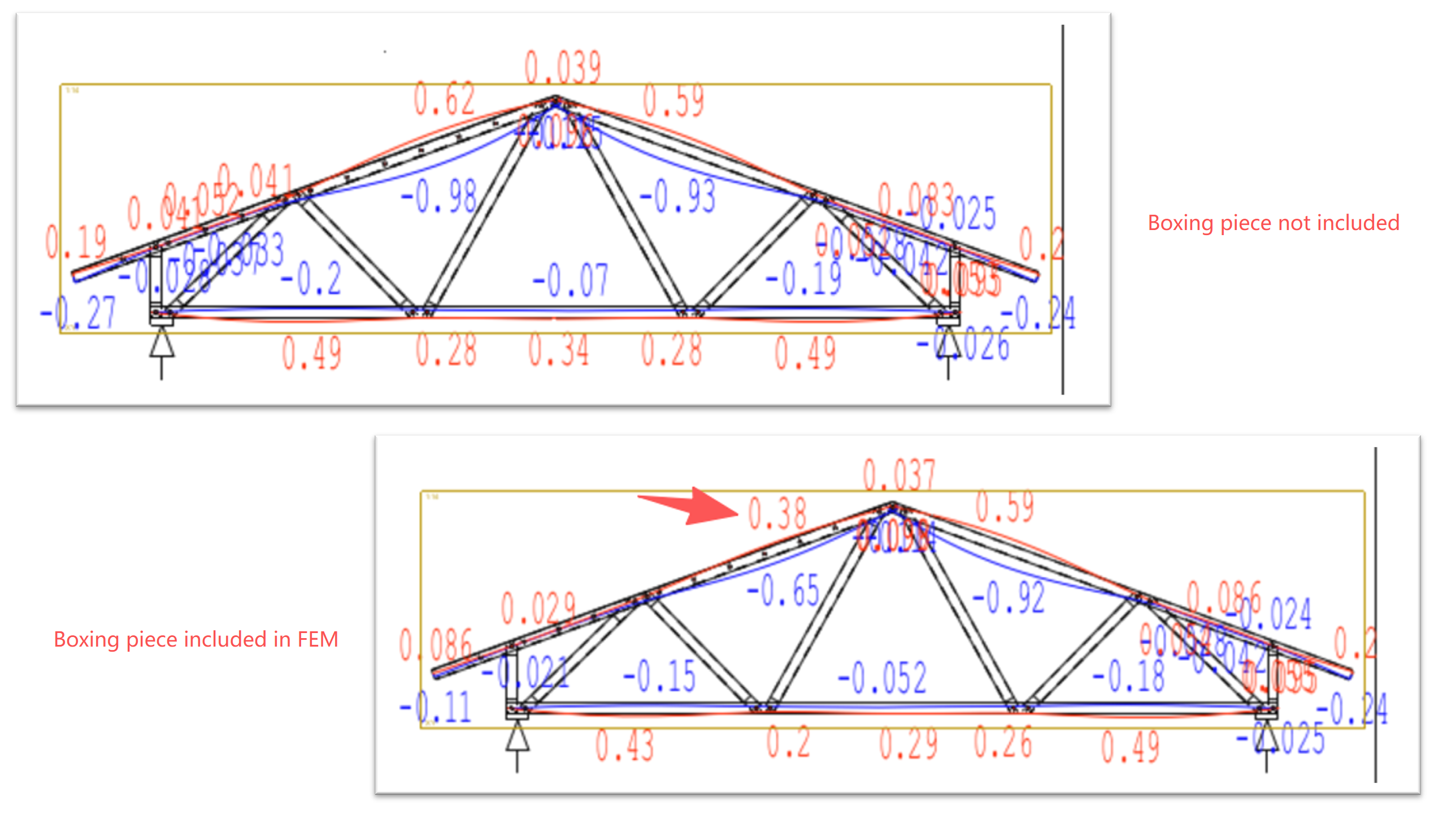
In this example, one of the sloped top chords is reinforced by boxing.
When truss engineering is run, the user can decide whether or not the boxing pieces are included in the FEM in the Design Criteria dialogue.
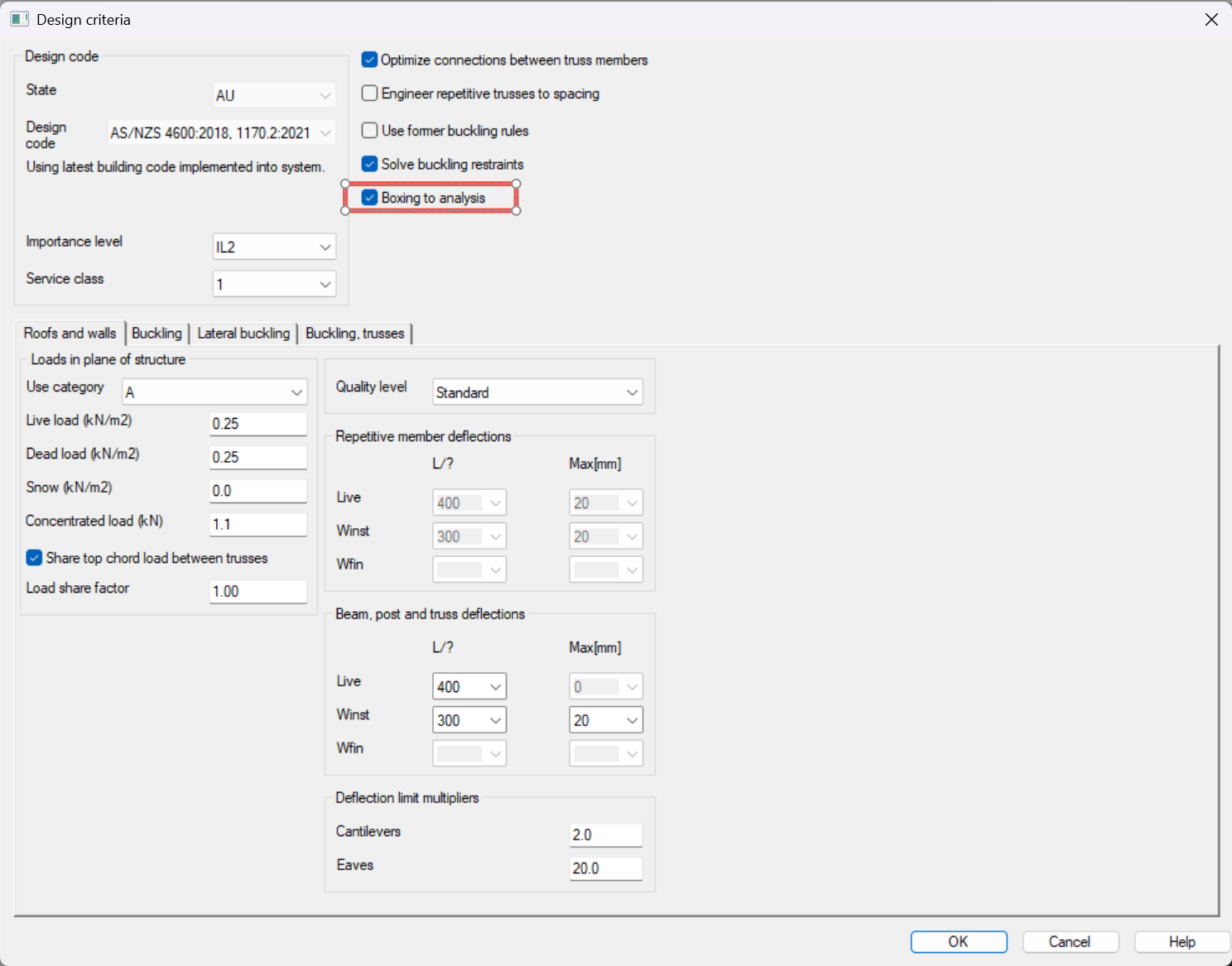
When Boxing to analysis is checked, the boxing piece is now included in the capacity check.
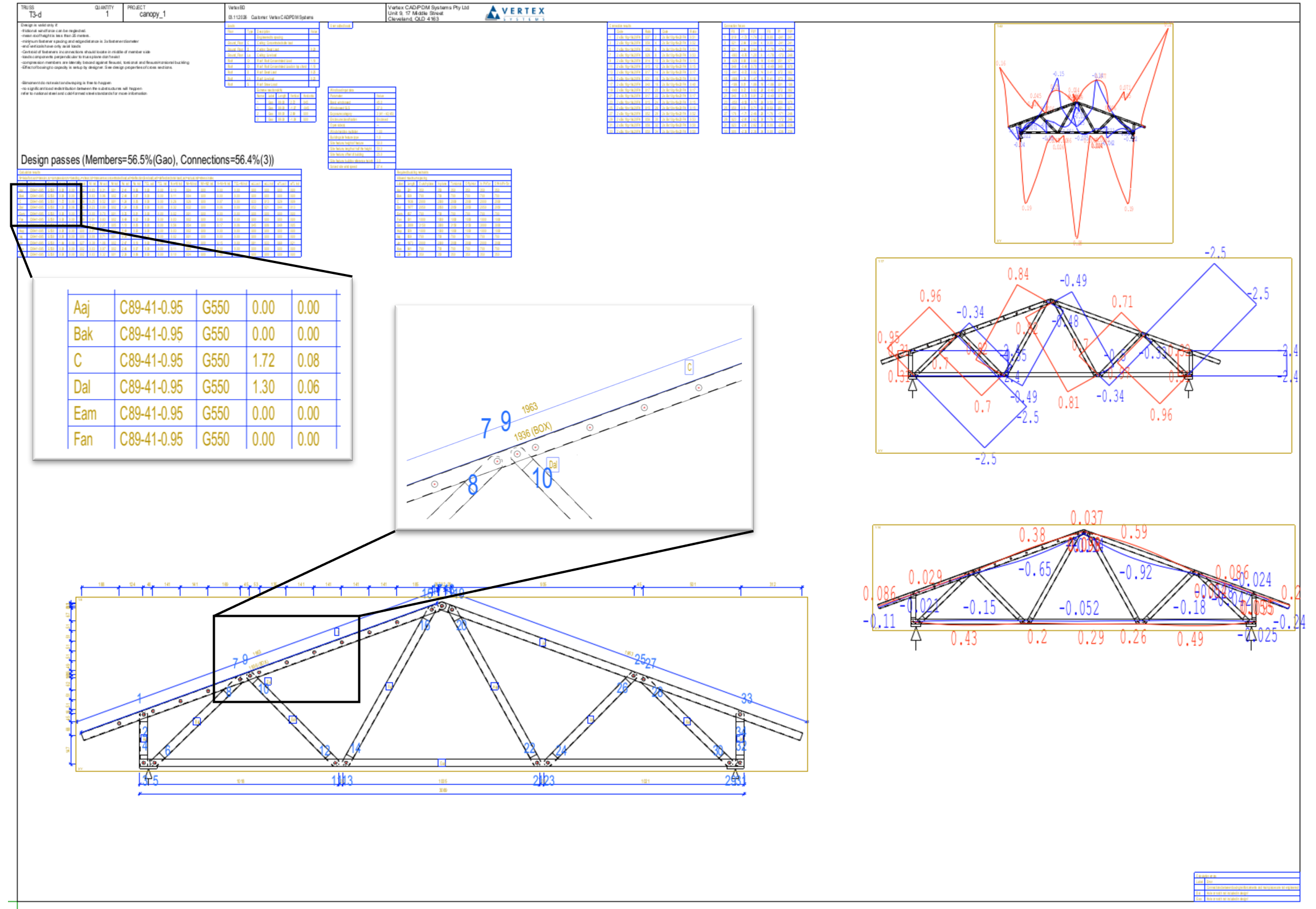
The deflection of the boxed top chord is reduced, compared to the result from previous versions.
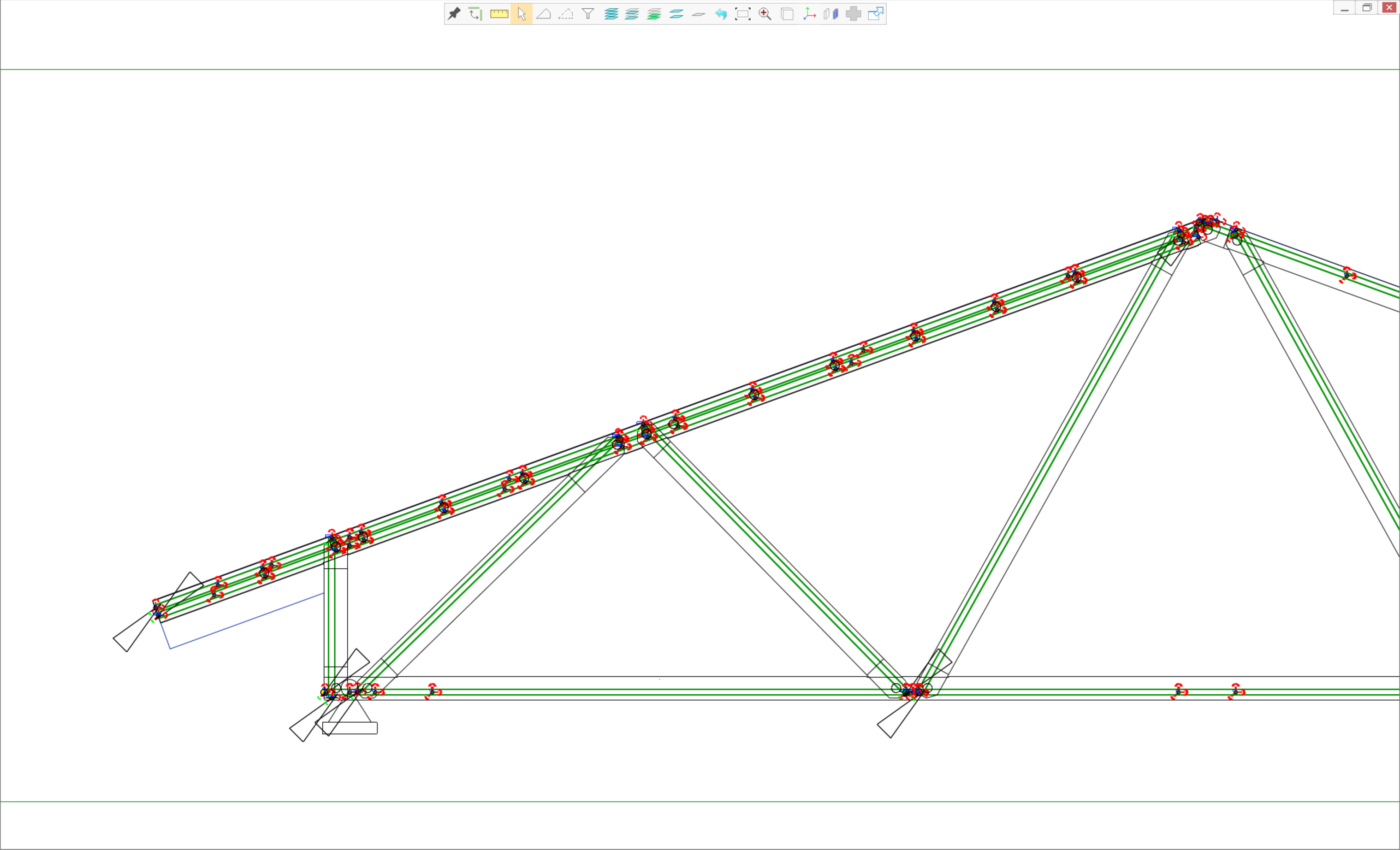
Truss engineering FEM (not available for users) shows that the boxing piece is connected to the main piece via the dimples on the flanges.
Limitation
-
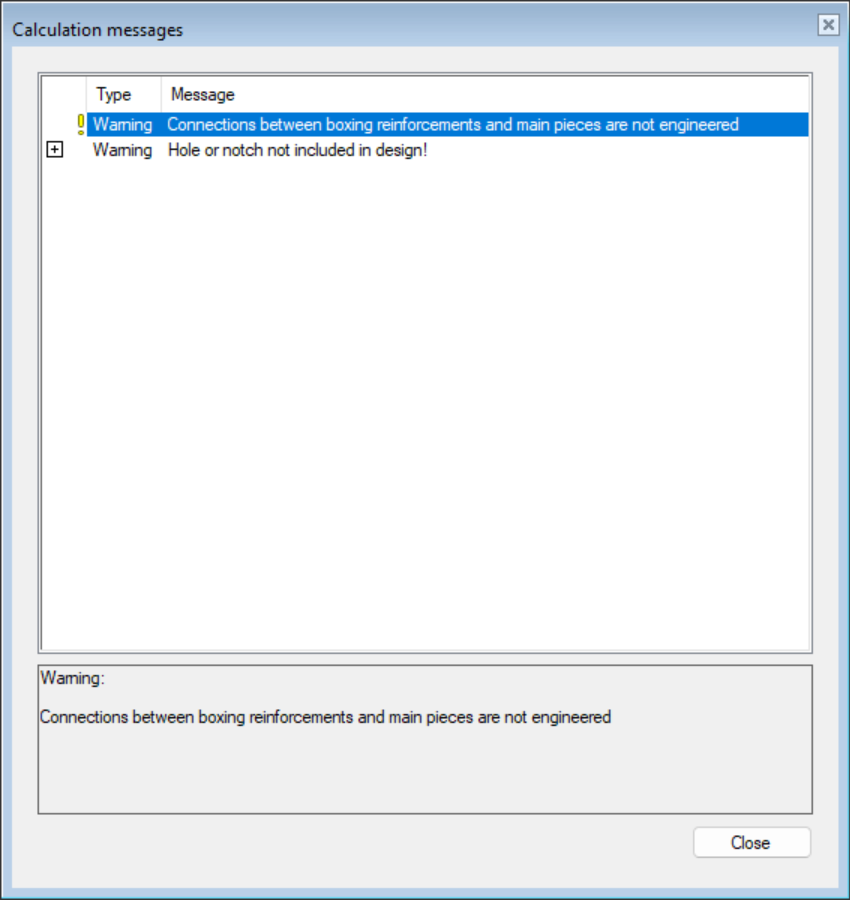
No slippage between the boxing and main pieces was allowed in the FEM, meaning that the connection between the two pieces is assumed to be always sufficient. The connections are NOT engineered. A new warning message is included when boxing reinforcement is detected.
-
Only C shaped sections with engineering data used as boxing pieces can be analysed.